Engine valves play a key role in internal combustion engines. They allow the cylinders to open and close as needed, preventing misfires and other engine performance issues. Like most vehicle components, valves can wear down over time and may eventually need to be replaced.
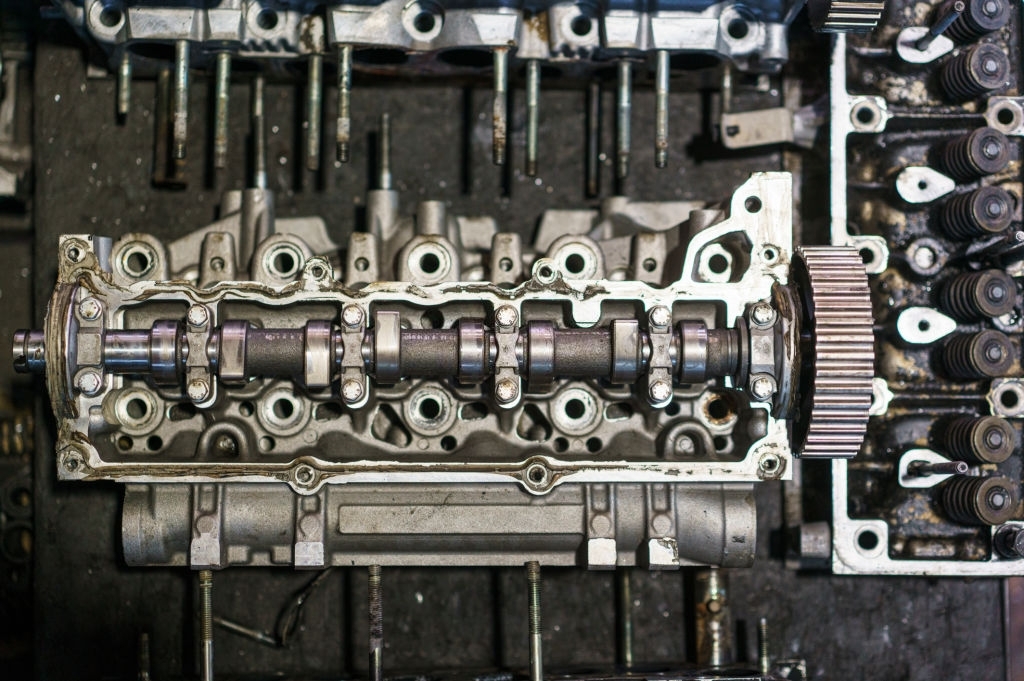
On average, a car engine valve replacement cost by a professional is $1,450. On the high end, an engine valve replacement may cost as much as $2,200. The actual valve kit costs under $100.
Below, we’ll discuss more information on the cost of replacing engine valves, as well as the reasons they may need replacement. Keep reading to learn everything that influences the overall cost!
How Much Does It Cost to Replace Engine Valves?
Unfortunately, there is no way to repair a damaged valve. If it burns out or otherwise stops working properly, replacement is your only option.
The total cost of this replacement will vary based on your engine type, vehicle model, and how many valves need replacement. In some cases, you may need to replace the cylinder head and valve seals at the same time. As you can probably guess, this will increase the total price.
In most cases, larger engines and high-performance vehicles will have the highest valve replacement costs. This is especially true if you need to replace all the valves at once.
Larger engines have more cylinders, and therefore, more valves. High-performance vehicles, on the other hand, vehicles use premium parts for increased power.
Since there are so many factors at play here, the cost of your valve replacement can vary.
Replacing a single valve can range from $50-$200, depending on whether it’s done professionally or not. A full valve replacement, on the other hand, may cost up to 2,200.
DIY vs. Professional Valve Replacement
A valve replacement is a pretty time-consuming job, which is what accounts for much of the high cost. For example, replacing all eight valves in a four-cylinder engine could take a mechanic around seven hours.
Since most auto shops charge between $75-$125 per hour, labor costs can add up quickly. The table below highlights what you should expect to pay in labor for a valve replacement.
| Mechanic’s Labor Rate | Average Cost of Single Valve Replacement | Average Cost of Full Replacement (Four-cylinder engine) | Average Cost of Full Replacement (Eight-cylinder engine) |
| Low End | $75 | $500 | $1,000 |
| Average | $100 | $700 | $1,400 |
| High End | $125 | $900 | $1,800 |
Replacement valves usually range between $5-$20 each. If you need a single valve replaced professionally, it could be $100-$200 total. However, if you need a full replacement, the total cost increases to $550-$2,200.
As you can see, a mechanic’s labor can account for a significant portion of your total cost. If you have some experience doing auto repairs yourself, you can save a lot of money doing the replacement yourself.
If you only need to replace a single valve, the total cost will likely be less than $100. This includes the replacement valve and all the tools you need to do the installation. If you need to do a full DIY valve replacement, it could cost anywhere from $90-$400.
Engine Valve Replacement Kits
If you need to replace all the engine valves at once, purchasing a kit is your best bet. These kits may include 8-16 valves (depending on your engine size), or they might include everything you need to replace the entire cylinder head assembly.
| Type of Kit | Cost Range |
| Set of 8 engine valves | $60-$120 |
| Set of 16 engine valves | $100-$250 |
| Four-cylinder cylinder head replacement kit | $170-$220 |
| Eight-cylinder cylinder head replacement kit | $250-$400 |
When you cut out the mechanic’s labor rate, as well as any associated taxes and fees, the price becomes much more manageable. However, be sure to only attempt a DIY replacement if you’re comfortable doing engine work.
What are Engine Valves?
Your vehicle’s engine valves work in conjunction with the cylinders to let air and fuel into and out of the engine. They’re located inside the cylinder head and held in position by valve guides.
Depending on the design of your engine, each cylinder may have 2-4 valves. These valves allow the cylinders to open and close, letting the air/fuel mixture enter the engine and pushing exhaust out.
There are two types of engine valves: intake valves and exhaust valves. Intake valves open to let air and fuel into the engine, and exhaust valves open to allow exhaust gases to exit.
Exhaust valves are much more likely to burn over time than intake valves. This is because they are frequently exposed to hot exhaust gas, and unlike intake valves, they do not get relief from the cool air entering the engine.
What Causes Burnt Valves?
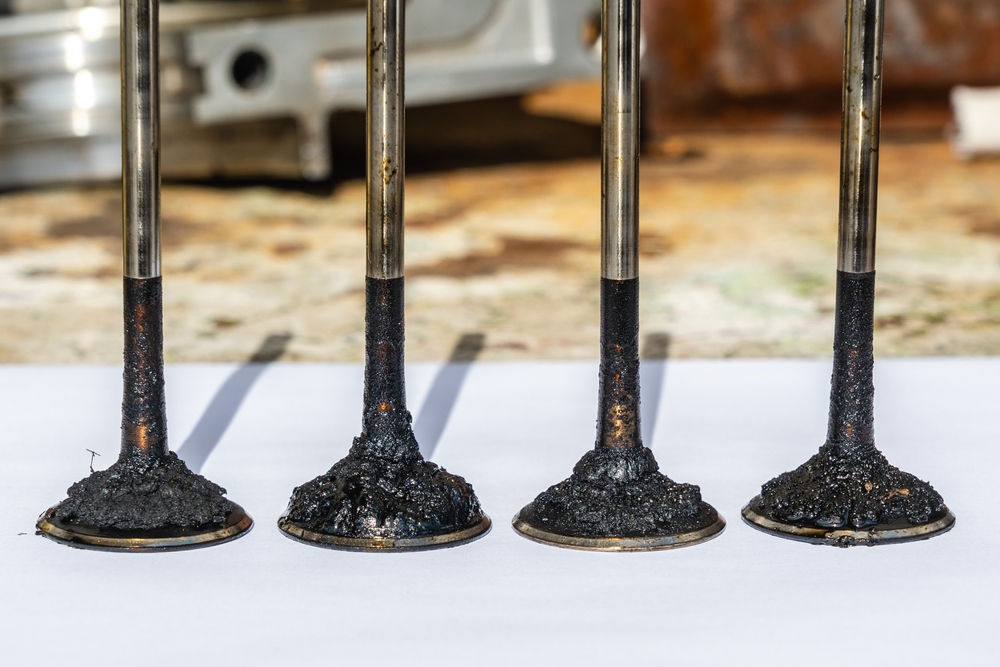
Excessive temperatures are the most common cause of burnt valves. When valves burn, they will no longer seal properly. This can result in a lack of compression, leading to other engine issues.
If you do not deal with a burnt valve promptly, the extreme heat may eventually cause the edges to burn off. Over time, the valve may even experience thermal shock, leading to cracks or breaks.
There are a couple of specific conditions that can lead to burnt valves. Below, we’ll discuss some of these.
Improper Sealing or Sticking
Some conditions can cause your engine valves to close improperly on the cylinder head. When this happens, hot exhaust gases may sneak past a closed valve, causing it to burn.
Some of the things that may cause improper sealing include
Weak valve springs
Carbon build-up
Improper machine work
Incorrect lash adjustment
Valve seat wear or erosion
Improper valve stem-to-guide clearance
Engine Performance Issues
Some engine problems, such as residue or build-up, can cause an increase in combustion temperatures. Because of the high temperature of the exhaust entering the cylinder, the valve is more vulnerable to burning.
High Operating Temperatures
Like a high combustion temperature, a high operating temperature can lead to burnt valves. High temperatures may result from either problem with the cooling system or issues with the localized temperature.
You may need to address an issue with your radiator, coolant passages, or even your head gasket to solve the problem.
Can You Drive with a Burnt Valve?
While it may not cause immediate problems, it’s never a good idea to drive without all of your valves functioning correctly. The longer you do, the higher the risk for additional damage becomes.
Eventually, your valve could become so burnt that it breaks off, damaging other engine components. In addition, continued misfiring could damage your catalytic converter. To save yourself the headache and a lot of money, get a burnt valve replaced as soon as possible.
Is It Difficult to Replace an Engine Valve?
Replacing an engine valve is not an extremely complicated process. However, it does require a good working knowledge of engine components, as well as the correct tools. To successfully replace a single valve, you’ll need the following parts and tools.
| Item Needed | Average Cost |
| Replacement engine valve | $5-$20 |
| Valve spring installation tool | $20-$30 |
| Small magnet | $10-$15 |
| Flashlight | $15-$20 |
Purchasing all these tools and materials will likely run you between $50-$90. If you’re only replacing one valve, the job should take no longer than an hour.
Replacing more than one valve will take longer, and you will also need additional replacement valves. Replacing all the valves in a four-cylinder engine typically costs between $90-$220, while replacing them in an eight-cylinder engine will cost $120-$400.
How to Replace an Engine Valve
After you purchase all the parts and tools needed to replace your engine valve, you’ll have to locate the valve springs under your hood. Then, follow the steps listed below:
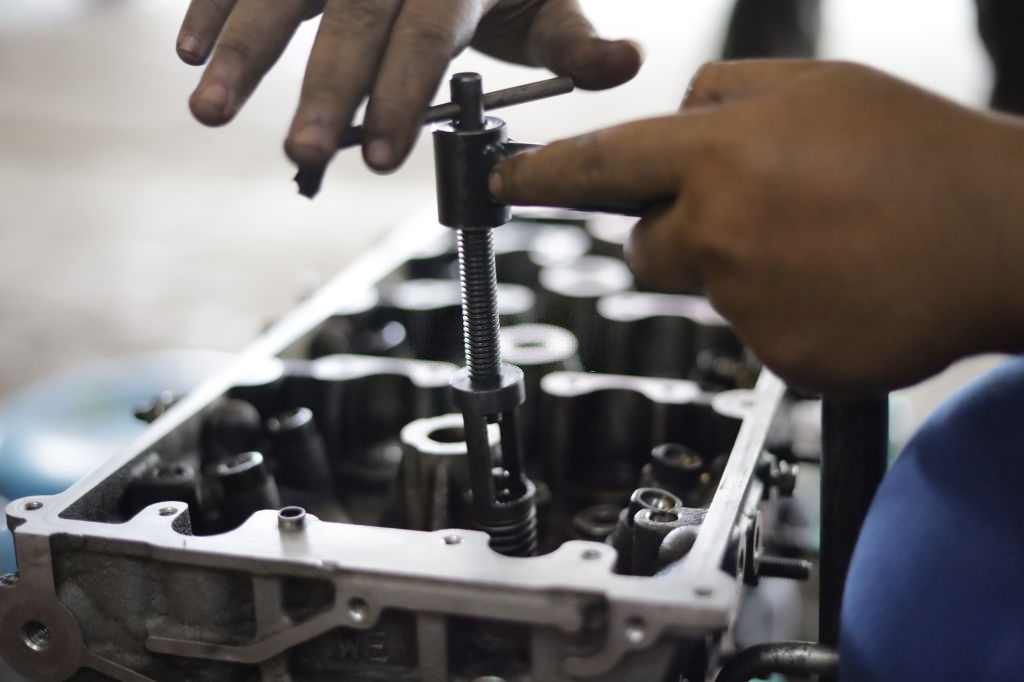
- Use your valve spring tool to press down on the spring until the retainer is even with the valve stem.
- Still holding down on the spring, use your magnet to remove the two retainer clips around the valve stem.
- Remove the pressure on the spring, then remove both the valve spring and retainer from the cylinder head.
- Being careful not to damage either the seal or the guide, reach underneath the cylinder head to slide out the old valve.
- Grab your replacement valve, and slide it up through the guide and seal.
- Replace the valve spring around the valve guide, then replace the valve retainer on top of the spring.
- Using your valve spring tool again, compress the spring until you can see the tip of the valve stem.
- With the tapered end facing down, reseat the retainer clips around the valve stem.
- Slowly release the spring, making sure to seat the clips properly around the stem and against the retainer.
The Bottom Line
Since there are so many factors at play, the total cost of a valve replacement can vary significantly. Those who need all their valves replaced professionally may pay up to $2,200. Someone who just needs to replace one valve on their own, on the other hand, might pay as little as $50.
There may be other issues to address when you replace an engine valve. If you do not have a good working knowledge of engine mechanics, consider going to a professional. This way, you can be sure the problem is addressed correctly.
Related Guides