How Much To Replace BMW Timing Chain? [DIY vs Mechanic]
Your timing chain is an essential part of your engine’s operation. If you think that your BMW’s timing chain will need to be replaced soon, you might be wondering how much this job will cost you.
On average, you’ll probably pay anywhere from $600-$1,100 for your replacement. One way you can reduce the overall cost of your timing chain replacement is by visiting a third-party repair shop instead of a BMW shop.
DIY vs. Mechanic Cost
Generally, most BMW owners prefer to have their vehicles worked on at the dealership. The inner workings of BMW cars are set up in a pretty unique way, and a BMW technician will know them better than a third-party mechanic. If you are considering doing it yourself, bear in mind that A timing belt replacement is a fairly complicated task. While the chain itself will likely cost under $100, labor costs will be relatively high.
However, having your car repaired at the dealership is almost always more expensive than having it repaired by a third party. So the best way to save is to get multiple quotes in your area. There are probably a few repair shops in your area with technicians trained to work on BMWs, and they’ll almost always do so for a lower cost.
Below, we’ll discuss more what exactly timing belts do and why it’s important to have this repaired as soon as you notice a problem.
How Does a Timing Chain Work?
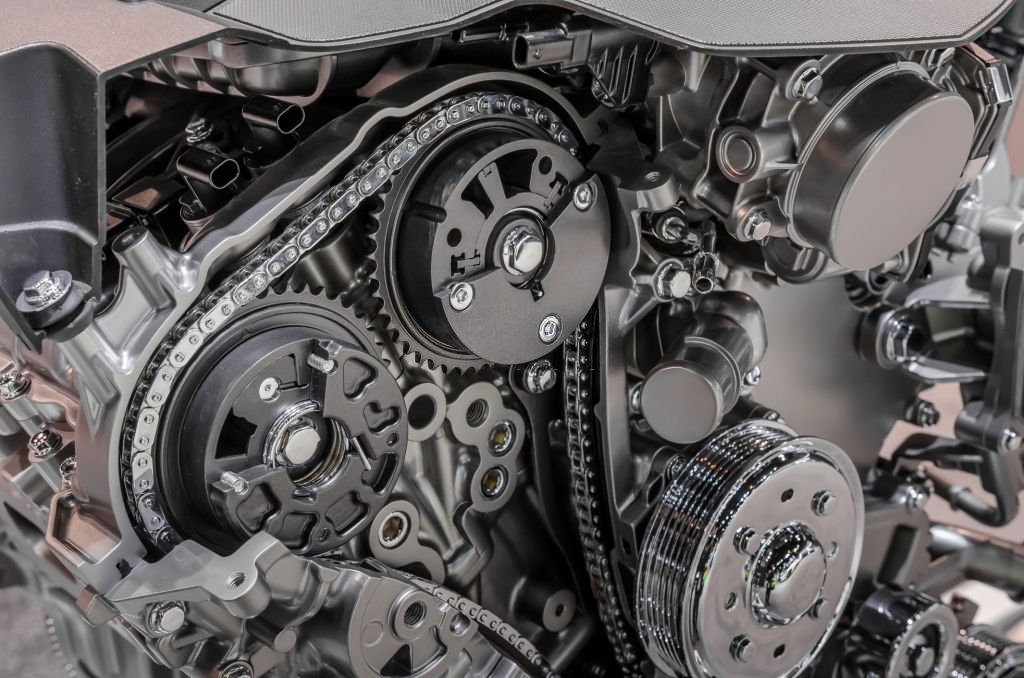
Your car’s timing chain connects the camshaft and the crankshaft. Its main job is to operate the intake and exhaust valve gears during the piston’s stroke cycles, helping the engine run properly.
The timing chain keeps each valve opening and closing at specific intervals. It monitors the four strokes of correct valve timing, which includes:
- The intake stroke
- The compression stroke
- The combustion stroke
- The exhaust stroke
Each of these strokes working smoothly in succession is key to your engine functioning as it should. Below, we’ll discuss what these strokes entail.
The Intake Stroke
A mixture of air and fuel enters the cylinders when the intake valve is open. The exhaust valve will be closed in this stroke and the pistons will be down.
The Compression Stroke
The compression stroke occurs when all valves are closed and the piston moves upwards. In this stage, the fuel and air mixture inside the cylinders is compressed.
The Combustion Stroke
Once the air and fuel mixture has been compressed, the piston will return to the down position. Then, it will ignite the mixture in order to burn the fuel and power the engine.
The Exhaust Stroke
In the final stage, the air and gas will come out of the cylinder and leave the car as an exhaust. During this stage, the intake valve remains open.
As each of these strokes occurs, the timing chain is what’s responsible for ensuring the camshaft and crankshaft rotate in sync. This keeps the whole operation running smoothly and allows the engine to receive power.
Timing Belts vs. Timing Chains
In years past, timing belts were the preferred option for performing this task. Recently, however, timing chains have become more popular. Chains are much more reliable and last significantly longer than belts.
While their operations are the same, a timing chain is a much more expensive upfront. However, when you factor in the cost of lifetime ownership, timing chains are a much better long-term solution.
How Can You Tell if Your Timing Chain Needs to be Replaced?
Having the timing chain fail while you’re driving is not a situation you want to be in. Thankfully, there are usually a few signs that tell you it will need to be replaced soon.
If your timing chain is going bad, you may notice one or more of the following signs:
- You have difficulty starting your vehicle
- You’re experiencing occasional misfires
- You’re noticing poor fuel economy
- Your car seems to be having a rough time while idling
- You have an oil leak or low oil pressure
- Your check engine light turns on
- You notice a loud noise coming from the engine
In most cases, a rattling, ticking, or high-pitched sound coming from under the hood is the first sign you’ll notice.
When in good operating condition, your timing chain will not make any noise. If you do hear it start to get loud, have it checked out before it fails.
How Long Do BMW Timing Chains Last?
Unlike timing belts, timing chains are generally built to outlast your engine. Unless your BMW owner’s manual states otherwise, there’s no need to replace it regularly.
In some models, it’s recommended that you replace the timing chain every 60,000-100,000 miles.
What BMWs are Prone to Timing Chain Problems
Some BMW models are more prone to timing chain issues than others. In particular, you need to watch out for 1, 3, and 5 series BMWs manufactured between 2007-2011.
These cars use the N47 motor engine, which is prone to a specific engine problem that causes their timing chains to wear out more quickly.
Unlike most vehicles, BMWs have their engines located in the rear. The positioning of this alone is a big cause of many issues, including increased timing chain wear.
If you have one of the models noted above, it may be helpful to have your timing chain inspected regularly.

Can You Drive with a Bad Timing Chain?
Your BMW’s timing chain is a critical part of maintaining proper timing. If this timing does not go smoothly, it can cause significant and expensive engine damage in the future.
While driving to the mechanic after you notice a loud sound coming from your engine probably will not be an issue, you don’t want to let it go further than this. Eventually, a bad timing chain will break.
If your timing chain breaks while you are driving, you’ll be able to tell immediately. You’ll first hear a lot of noise, and your car will likely come to a grinding halt.
You won’t be able to drive any longer and will have to call a tow truck to bring you to the nearest mechanic.
Although a timing chain replacement is not a cheap fix, the engine damage caused by a broken timing belt will be significantly more expensive. It will usually cause severe engine damage, as well.
A job that would have cost you under $1,000 will now probably cost several thousand to fix!
How is a Timing Chain Replacement Done?
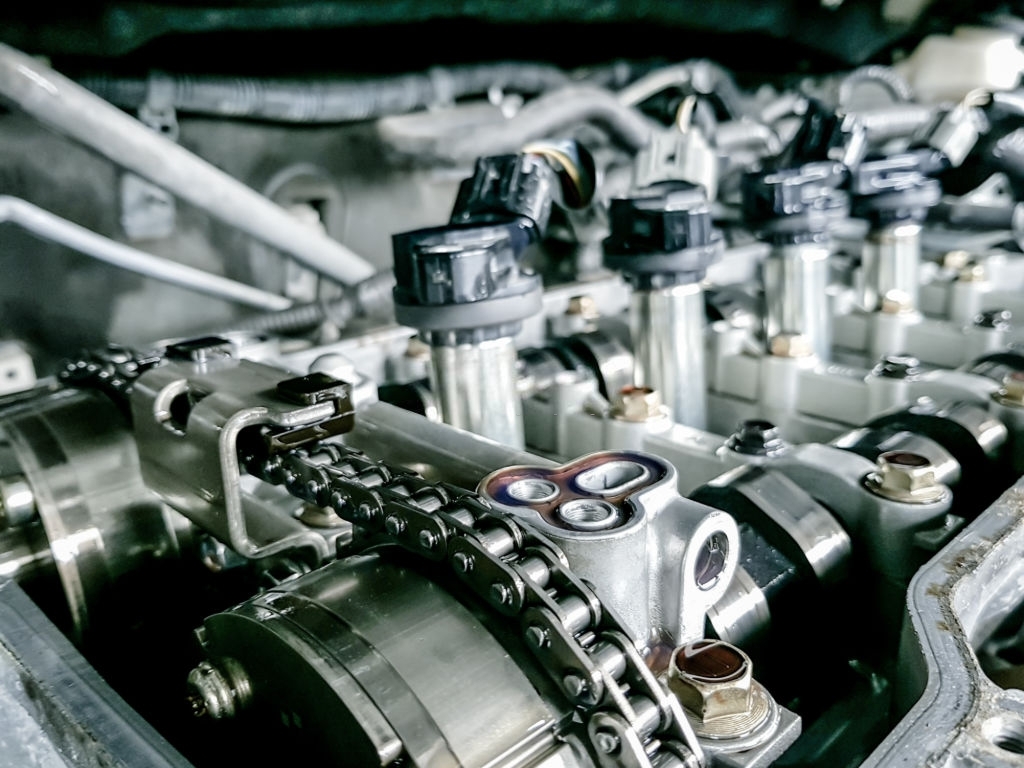
A timing chain replacement is a very involved and time-consuming job. Typically, the mechanic will have to perform the following steps to ensure it’s done correctly.
- First, they will clean out the engine with a degreaser.
- After the engine is clean, the mechanic will need to determine your vehicle’s firing order. They’ll then make sure that cylinder 1 is up by removing the spark plugs and placing a screwdriver in the spark plug hole, with the piston close to the screwdriver’s top.
- After this, they will disconnect your car’s battery. Then, the radiator cap will need to be removed so they can drain your coolant.
- Next, they will need to remove your radiator hoses, heater hoses, drive belts, water pump and fan, and finally, the timing chain cover.
- There will be a mark on your current timing chain and on the tooth of the gear chain. The mechanic will have to rotate your engine until these marks are aligned with each other.
- They’ll then make a new reference mark across the chain and gear, then loosen the tension gear and remove the old chain.
- Before the new chain can be installed, the gear will first need to be lubricated well.
- Now, the new timing chain can be placed on the gears after the mechanic ensures that the new reference marks align properly.
- After this, the mechanic will reinstall the camshaft sprocket bolts. They will then use a hammer and punch to remove the old crankshaft seal, tap the new seal into the timing cover, and cover it with oil.
- Once this is all done, the mechanic can begin replacing the timing chain cover and reinstalling the pumps and fan.
- They’ll refill the radiator with coolant and reconnect the belts and hoses that were removed.
- Finally, the battery can be connected again.
Can You Replace a Timing Chain Yourself?
Due to the complexity of this job, it’s not usually recommended that you do the replacement yourself. If you get something wrong, you could cause serious damage to your engine.
If you cause damage to your engine trying to do this repair yourself, you’ll end up spending more in the future. To save your engine and your wallet, always have a professional complete the replacement for you.
The Bottom Line
If your BMW needs a new timing chain, the total cost could be anywhere from $400-$1,100. The exact price will depend on your specific model, whether you go to the dealership or a third party, and how long the job takes.
A timing chain replacement is not a beginner job, so you should not attempt a DIY repair unless you have the experience necessary. When in doubt, have a professional fix it for you.
Related Guides